Franchise brands lose consistency when every franchisee builds their own tip process. The fix is to move tip distribution from the franchisee level to the brand level. One policy. One platform. One employee experience across the network. Each operator keeps their own view of their own location, but they no longer have to invent the rules.
This post explains why per-franchisee tip processes break brand consistency, what brand-level standardization looks like in practice, and how to roll it out without taking the local feel away from individual operators. The worked example is Pancheros, a fast-casual Mexican brand that brought one tip standard to every franchised location with PayDay Portal.
Why per-franchisee tip processes hurt the brand
Franchise models are built on a tradeoff. The brand sets the standards. The franchisee runs the business. That works when the standards are clear and the tools are shared. It breaks when one of the operational standards is missing.
Tip distribution is one of those standards that often gets left to the franchisee. Each operator handles cash tips their own way. Each interprets the split rules in their own way. Each tracks the paperwork on their own. The brand never agreed to this, but the brand ends up living with it. Three things break when tip distribution lives at the franchisee level:
- The employee experience changes by location. A server who works at one Pancheros and then transfers to another should get the same tip experience. When every location does it differently, the brand promise breaks for the people who carry it out.
- Franchisees spend time on the wrong thing. A new operator should be focused on running the restaurant. When they have to invent a tip process from scratch, hours go into something that should already be solved.
- Corporate cannot see the network. When every location tracks tips in its own format, brand-level reporting needs a translation step. Decisions about labor, retention, and pay get harder to make at the brand level.
What brand-level tip standardization looks like
Standardization at the brand level does not mean a one-size-fits-all dashboard. It means the rules are set once, applied across the network, and viewed at the level that fits each user. Here is what that looks like in practice.
The brand owns the policy. The tip policy lives at the brand level, not the location level. How tips are calculated, how they are split, and how they reach payroll are all decisions the brand makes once. Every franchisee inherits the same policy.
Each franchisee runs their own view. A single brand policy does not mean a single dashboard. Each franchisee sees their own location’s tip activity. Brand-level reporting rolls up cleanly, but the local operator keeps their own view of their own restaurant.
The employee experience is the same at every location. Whichever location an employee works at, the math runs the same way. The mobile app looks the same. The way tips reach the employee is the same. The brand promise to the workforce holds up across the network.
Per-franchisee tip processes vs. brand-level standardization
| Question | Per-franchisee tip processes | Brand-level standardization |
|---|---|---|
| Who builds the tip policy? | Each franchisee, from scratch | The brand, once |
| What does a new operator do on day one? | Invent a tip process | Plug into the existing one |
| What does the employee see? | An experience that changes by location | The same experience at every location |
| How does the brand see the network? | After a translation step between formats | Through reporting that already rolls up |
How to roll out a brand standard without losing the local feel
Operators sometimes resist standardization because they think it means losing what makes their location work. That fear is usually misplaced. A standard tip policy does not touch the things franchisees actually own.
Standardize the policy, not the operator. A brand tip policy is about how the math runs and how the money moves. It is not about hiring, training, menu, service style, or local marketing. The franchisee keeps all of that. The policy just makes sure the tip side of the operation works the same way everywhere.
Give each operator their own view. Per-location reporting is what makes brand-level standardization workable for franchisees. The operator still sees their own labor, their own tip activity, their own staff. They just no longer have to build the framework themselves.
Match the workforce, not the org chart. Franchise teams often look different from corporate teams. The platform has to meet the workforce in the language it uses, on the devices it carries. A bilingual mobile app is not a feature. It is the baseline a franchise platform has to meet.
See how Pancheros standardized tips across the franchise
Pancheros brought one tip standard to every franchised location with PayDay Portal. Digital distribution by hours worked. A bilingual employee app. Reporting built for a franchise network. Each franchisee keeps their own view.
Read the Pancheros success story →What franchise brands should ask a tip platform
Franchise brands evaluating tip platforms should ask four questions. The right answers surface fast.
Can the brand set one tip policy that applies across every franchisee? If the answer involves each franchisee setting their own rules, the platform is not built for franchise standardization. The policy needs to live at the brand level and apply uniformly across the network.
Can each franchisee see their own location’s data? Per-location reporting is what makes brand-level standardization work. The operator needs their own view, even when the rules come from corporate. A platform that only shows brand-level data is not a franchise tool.
Does the math reflect how the workforce actually earns? Hours-worked distribution is fair, defensible, and the same every pay period. A platform that splits tips by shift assignment or that requires manual cleanup is not ready for a franchise rollout. The math has to hold up at every location.
Does the employee app match the workforce? Franchise teams often include staff who prefer English and staff who prefer Spanish. The app has to work for both. If half the team has to ask a manager for tip details, the standardization promise is not real.
How Pancheros standardized tips across the franchise
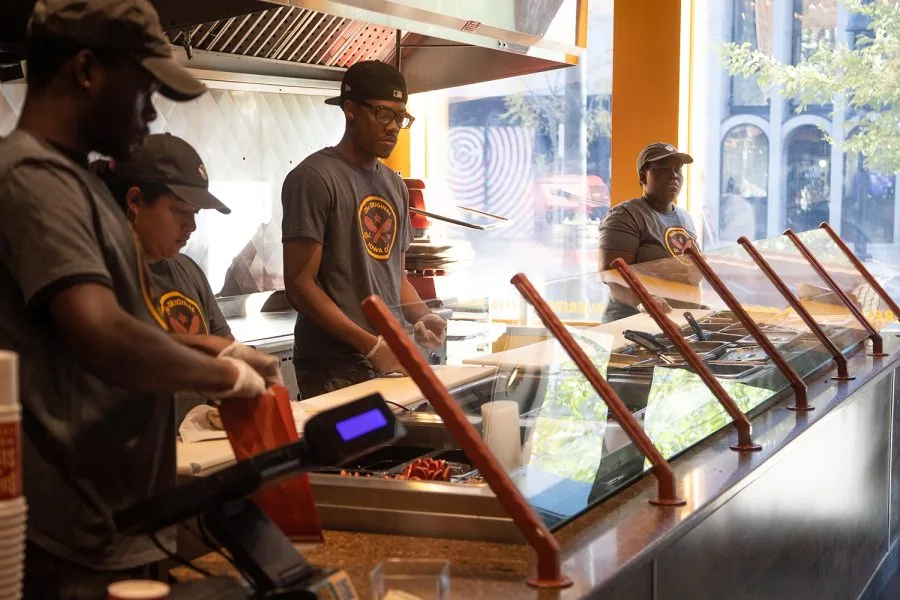
Pancheros is a fast-casual Mexican brand that runs on a franchise model, with locations operated by independent franchisees across the country. Before PayDay Portal, every location handled cash tips differently. The brand had no shared framework, and new franchisees had to build their own tip process from scratch. Pancheros worked with PayDay Portal to fix that. The rollout had four parts:
- Digital tip distribution by hours worked. Every tip dollar at a Pancheros location is now calculated and paid out digitally. Splits are proportional to hours worked. No cash drawers, no manual math.
- One tip policy across every location. The brand owns the policy. It lives inside PayDay Portal. Every franchised location runs the same way, and new operators plug into the existing setup.
- Bilingual employee mobile app. The app works in English and Spanish. Employees check their tips, view their balances, and manage their accounts in the language they prefer.
- Reporting built for a franchise network. Each franchisee sees their own location’s tip activity. Corporate sees the network. Reports are consistent from one location to the next.
The result is what Pancheros described in their own words: “The franchise model didn’t have to mean fragmented operations.” One standard. Local operation. The brand promise holding up at every location.
The takeaway for franchise brands
A franchise model that lets every operator build their own tip process is paying for that decision in employee experience, franchisee time, and brand-level visibility. The fix is not complicated. Move tip distribution from the franchisee level to the brand level. Set the policy once. Give each operator their own view. Match the workforce in the language it uses.
The questions to ask before a rollout are direct. Can the brand set the policy? Can each franchisee see their own data? Does the math match how the workforce earns? Does the app match how the workforce communicates? If the answers are yes, the franchise gets one standard without losing the local feel.